Latest Updates in ITR Amendments 2026 (AY 2026-27)
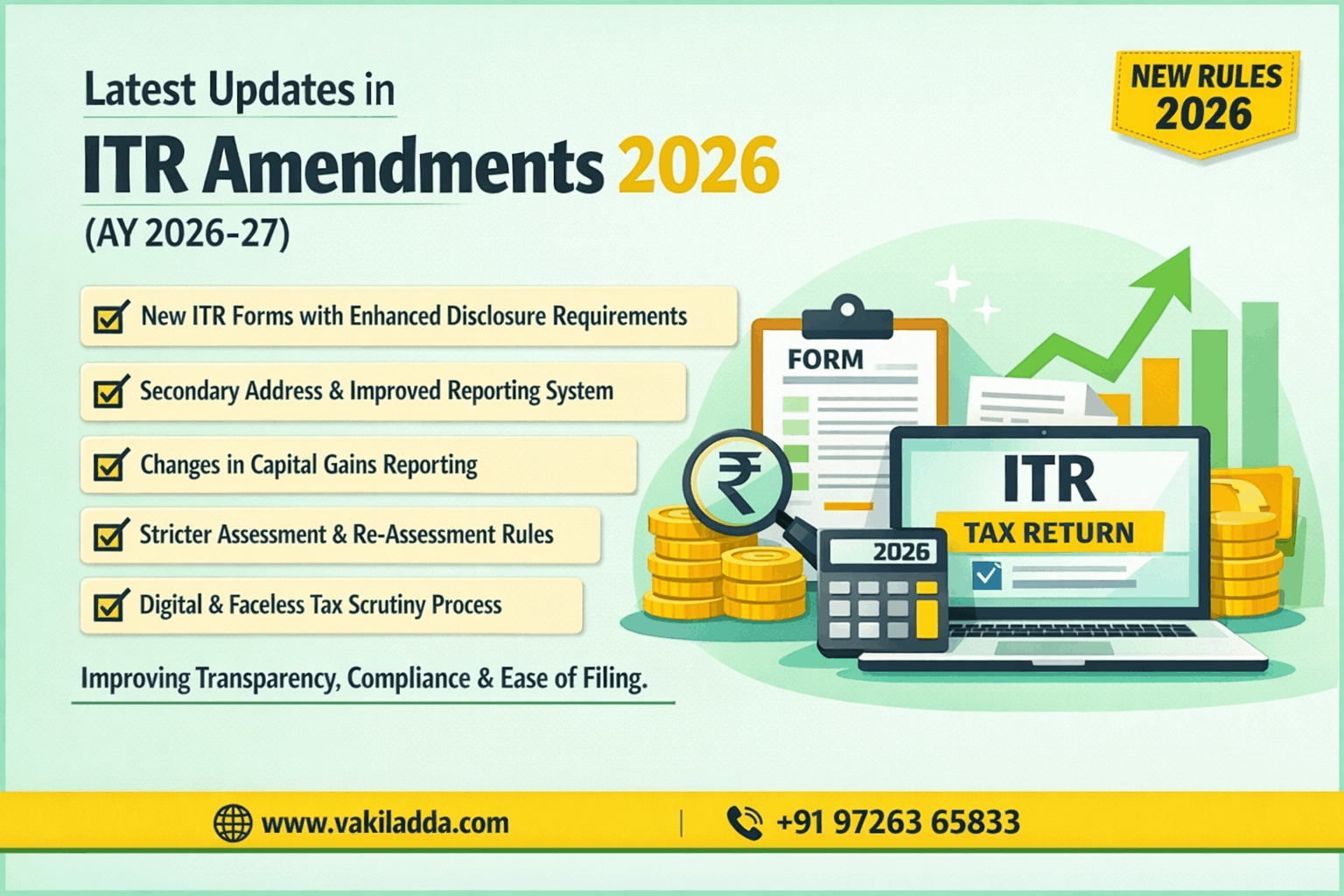
New ITR Rules & Key Changes (AY 2026–27)
Modern updates to simplify tax filing and improve compliance
The Income Tax system for AY 2026–27 introduces major structural improvements aimed at simplifying compliance for individuals and businesses.
The new framework under the Income Tax Act, 2025 replaces several older provisions and introduces a cleaner, more unified tax structure.
A major shift is the adoption of the “Tax Year” concept, replacing the traditional FY and AY system to reduce confusion among taxpayers.
Updated ITR forms now demand more structured disclosures, ensuring transparency in income, investments, and deductions.
Key Highlights
- New Income Tax Act, 2025 implemented
- Introduction of unified “Tax Year” system
- Redesigned ITR forms with better structure
- Stricter disclosure of income sources
- Enhanced transparency in deductions
- Stronger compliance monitoring system
- Simplified and user-friendly filing process
Latest ITR Benefits & Advantages in 2026 (AY 2026-27)
The Income Tax Return (ITR) updates for AY 2026-27 bring several important benefits aimed at simplifying tax filing and improving compliance for taxpayers. The government has focused on making the tax system more structured, transparent, and efficient, especially under the revised tax framework. One of the key highlights is the continued focus on the new tax regime,which offers lower tax rates and simplified calculations, helping taxpayers reduce their overall tax burden without dealing with complex deductions.
Additionally, the updated system introduces better clarity in reporting income, claiming deductions, and filing returns. With improved ITR forms and enhanced digital processes, taxpayers can now file returns more accurately and with fewer chances of errors. The government has also strengthened the updated return (ITR-U) facility, allowing taxpayers to correct mistakes or report missed income within a specified time, encouraging voluntary compliance without heavy penalties.
These changes are especially beneficial for salaried individuals, freelancers, and business owners, as they provide flexibility, reduce confusion, and ensure smoother processing of returns. Overall, the 2026 updates aim to create a more reliable and taxpayer-focused system that supports easy compliance and better financial planning.
Lower tax burden under the new tax regime
Better clarity in income reporting and deduction claims
Improved updated return (ITR-U) facility for error correction
Reduced chances of notices due to accurate reporting
Faster processing through digital and automated systems
Enhanced transparency in tax calculation and compliance
Revised and structured filing deadlines for different categories of taxpayers
Clear timelines defined for original, revised, and updated return filing
Increased late filing fees under Section 234F for delayed ITR submission
Higher interest charges under Sections 234A, 234B, and 234C for non-compliance
Strict penalties for incorrect, false, or incomplete income reporting
Additional tax burden on late filing of Updated Return (ITR-U)
Faster issue of notices and stricter compliance tracking by IT Department
Enhanced scrutiny for high-value transactions and mismatch cases
Reduced tolerance for repeated filing errors or non-disclosure of income
Stronger enforcement system to ensure timely and accurate tax filing
The Income Tax updates for AY 2026-27 continue to focus on simplifying taxation while giving taxpayers more flexibility in choosing how they want to file their returns. The new tax regime remains the default option, offering lower tax rates and simplified slabs, while the old tax regime is still available for taxpayers who want to claim deductions and exemptions under various sections of the Income Tax Act.
Another important update is the strengthened Updated Return facility (ITR-U), which allows taxpayers to correct errors or report missed income even after filing their original return. Under the latest rules, an updated return can be filed within 48 months from the end of the relevant assessment year.
Overall, these updates aim to promote voluntary compliance, reduce errors in tax filing, and provide more flexibility while maintaining a structured and transparent tax system.
New tax regime is now the default option
Old regime still available for deductions
Taxpayers can choose based on planning
ITR-U allowed within 48 months window
Additional tax for delayed updated return
Correct mistakes anytime within allowed period
Improves transparency & compliance
Under the latest rules, individual taxpayers filing ITR-1 and ITR-2 must submit their returns by 31 July 2026, while taxpayers required to file ITR-3 and ITR-4 have an extended deadline up to 31 August 2026. However, failure to file returns within the due date may result in penalties, interest charges, and loss of certain tax benefits.
ITR-1 and ITR-2 due date: 31 July 2026
ITR-3 and ITR-4 due date: 31 August 2026
Late filing fee up to ₹5,000 under Section 234F
Interest applicable under Sections 234A, 234B, and 234C
Losses cannot be carried forward if return is not filed on time
Increased automated checks for late-filed returns
Strict penalties for delayed or incorrect income tax filing
Enhanced digital tracking and faster processing system